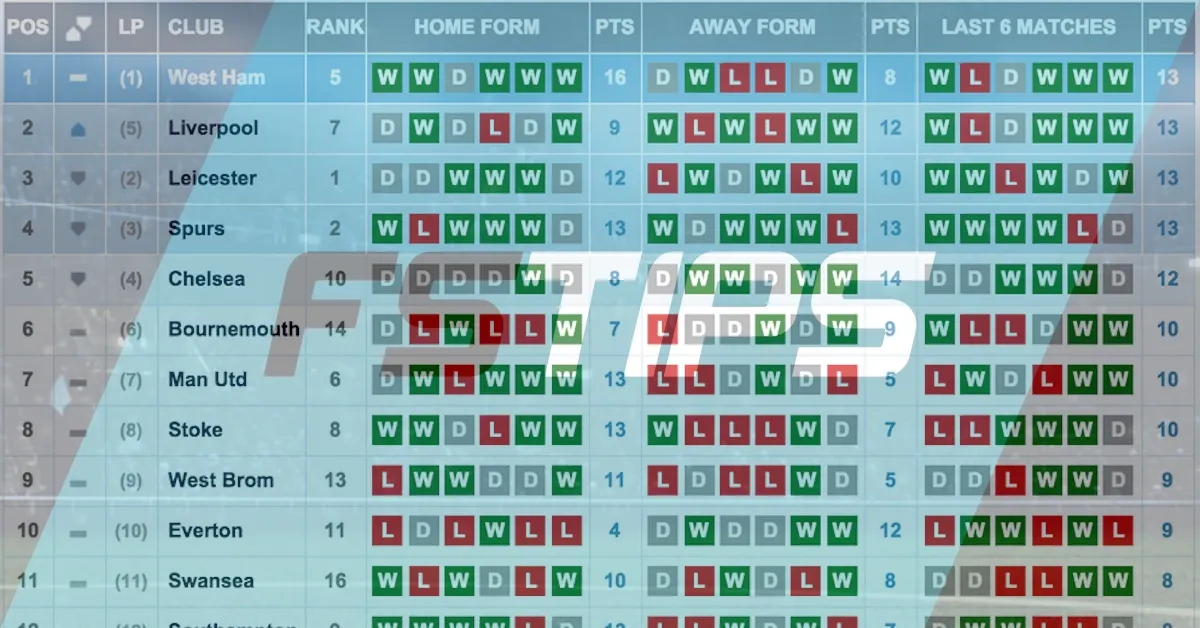
Recent form is one of the first things people look at before making a football prediction. A team with several wins in a row feels reliable, while a side coming from defeats looks easy to oppose. It is simple, quick and emotionally convincing. But recent form can also be one of the biggest traps in football analysis. Results tell us what happened, but they do not always explain how it happened, why it happened, or whether it is likely to continue. A strong run can hide fragile performances, while a poor run can disguise a team that is improving beneath the surface. The hidden risk appears when form becomes the conclusion instead of the starting point.
Results Can Look Stronger Than Performances
A winning streak can create confidence very quickly, especially when the scores look clean. Three or four victories in a row can make a team appear stable, efficient and ready to keep going. But not all wins carry the same analytical value. A team may win because of late goals, penalties, defensive mistakes, red cards or unusually clinical finishing. Those results count in the table, but they may not represent sustainable dominance.
This is where recent form becomes dangerous. If a team has been winning without controlling matches, the surface record can mislead. They may be allowing too many chances, relying heavily on one player, or spending long periods under pressure. The final scores may look convincing, but the match patterns may suggest vulnerability. Bettors who only read the form line may see momentum. A deeper analyst may see warning signs.
The same applies to goals scored. A team that has scored regularly may look attacking and confident, but the quality of chances matters. Were they creating clear openings from structured play, or benefiting from errors and deflections? Were they scoring early and controlling games, or chasing matches and finding late moments? Form without context can turn football into a scoreboard exercise, and that is rarely enough.
Poor Form Does Not Always Mean Poor Football
Bad recent results can be just as misleading as good ones. A team may lose several matches and still perform better than the table suggests. They may have faced difficult opponents, suffered from temporary injuries, conceded late goals or failed to convert strong chances. In these cases, the form line says one thing, but the football says another.
This is especially important when a struggling team enters a more suitable fixture. A side that looked weak against elite opposition may become far more competitive against a team closer to its level. If the public only sees defeats, the market can undervalue the improvement potential. The trap is assuming that losing form automatically continues, even when the match conditions are changing.
Confidence is also more complicated than most people think. A team on a poor run may be under pressure, but pressure can produce different reactions. Some teams become nervous and passive. Others become more disciplined, more focused and more aggressive without the ball. A manager may simplify the tactical plan, return to basics and make the team harder to beat. In those moments, poor form can actually push a side towards a more compact and competitive performance.
The Fixture List Can Distort Momentum
Recent form often ignores fixture difficulty. A team may look excellent because it has faced weaker opponents, played several matches at home or benefited from a comfortable schedule. Another team may look poor because it has faced title contenders, travelled frequently or played during a congested period. Without understanding the fixture list, form becomes a shallow measurement.
Home and away context matters too. Some teams build strong recent records through home performances but remain vulnerable away from their own stadium. Others may have suffered away defeats but still be reliable at home. Treating all recent results equally removes one of the most important layers of football analysis.
Competition context can also distort the picture. Cup matches, European fixtures and league games often carry different priorities. A team may rotate heavily in one competition and look weaker than usual, or focus energy on a more important match and underperform elsewhere. Looking at recent form without separating these situations can create a false impression of decline or improvement.
The timing of goals also matters. A team that scores early often plays a different game from one that scores late. Early goals can open space and make performances look more controlled. Late goals can rescue results without proving superiority. Two wins may look identical in a form table, but they can tell completely different stories.
Tactical Matchups Can Break The Form Narrative
One of the biggest mistakes in football prediction is assuming that form automatically transfers from one match to the next. It does not. A team that looked excellent against open opponents may struggle against a compact defensive block. A side that thrives in transition may become less dangerous when forced to dominate possession. A team that presses well may be less effective against an opponent comfortable playing direct.
This is why tactical matchup matters more than the basic form line. Recent wins can create the impression that a team is simply playing well, but the style of those wins must be examined. Did the opponent give them space? Did the match state suit their strengths? Were they allowed to counterattack? Were they facing a defence that lacked pace or organisation?
If the next opponent creates different problems, the recent form may lose predictive power. A team can be in good form and still be entering an uncomfortable match. Equally, a team in poor form may match up well against a particular opponent. Football is not just about who is playing better in general. It is about whose strengths are more likely to appear in this specific game.
Form Should Be Questioned, Not Ignored
Recent form is not useless. It can reveal confidence, rhythm, attacking improvement, defensive stability and tactical progress. The mistake is not using form. The mistake is trusting it without asking what sits behind it. A good prediction should treat recent results as evidence, not proof.
The smarter approach is to break the form line apart. Who were the opponents? Were the performances strong or fortunate? Did the team control matches or survive them? Were key players available? Was the schedule fair? Does the next tactical matchup support the same pattern? These questions help separate genuine momentum from a temporary run of results.
Football predictions often go wrong when the easiest information becomes the loudest information. Recent form is visible, simple and persuasive, which is exactly why it can mislead. The hidden angle is found beneath the results, in the details that explain whether a team is truly improving or merely benefiting from circumstances. A team in form may still be risky. A team out of form may still be dangerous. The best analysis starts by respecting form, then challenging it before trusting it.